Buy kwzv.com ?
We are moving the project
kwzv.com .
Are you interested in purchasing the domain
kwzv.com ?
domain@kv-gmbh.de · 0541-91531010
Buy kwzv.com ?
When are ligands neutrally charged?
Ligands are neutrally charged when they have an equal number of positive and negative charges. This can occur when the ligand has a net charge of zero, such as in the case of water (H2O) or ammonia (NH3). Additionally, ligands can also be neutrally charged when they form coordinate covalent bonds with a metal ion, resulting in a neutral overall charge for the complex. **
What is the toughness of ligands?
The toughness of ligands refers to their ability to form stable coordination complexes with metal ions. Ligands with high toughness have strong bonds with the metal ion, making them less likely to dissociate from the complex. This property is important in determining the stability and reactivity of coordination complexes. Tough ligands are often used in catalysis and other applications where the complex needs to remain intact under harsh conditions. **

Similar search terms for Ligands
Top-Angebote
Products related to Ligands:
-
All Categories Goods Portable Heavy Duty Ladder, Anti Slip Pedal, Safety Locking Design, Soft Handgrip, Compact And Durable Portable Heavy Duty Ladder, Anti Slip Pedal, Safety Locking Design, Soft Handgrip, Compact And DurableIntroducing the Heavy Duty Ladder that combines durability, safety, and portability in one essential tool. Whether you're tackling home improvement projects, accessing hardtoreach areas, or working outdoors, this ladder is designed to meet your...113,97 $*Shipping: 0,00 $Secure redirect to the provider
-
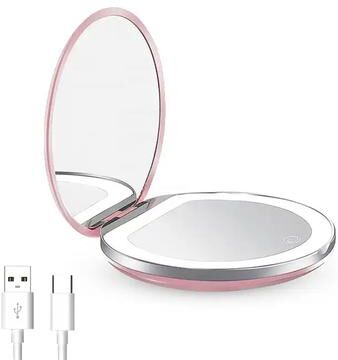
Fusion Finds Rechargeable LED Makeup Mirror With Magnification Portable Travel Lighted Compact Mirror pinkLook your best wherever life takes you with this LED makeup mirror designed for flawless touchups anytime. This travel makeup mirror combines bright LED lighting, 1X and 3X magnification, and a slim foldable design that fits effortlessly into your...34,97 $*Shipping: 0,00 $Secure redirect to the provider
-
Fusion Finds Portable LED Makeup Mirror With Magnification USB Rechargeable Travel Compact Mirror blackExperience flawless touchups wherever life takes you. This travel makeup mirror combines a crystalclear 1X mirror with a 5X magnifying side, helping you perfect every detail from eyeliner to brows with ease. A builtin soft LED fill light delivers...84,97 $*Shipping: 0,00 $Secure redirect to the provider
-
Perfect Picks Market Rechargeable Outdoor LED Mini Keychain Light Super Bright, Magnetic Warning Flashlight, Portable And Durable Rechargeable Outdoor LED Mini Keychain Light Super Bright, Magnetic Warning Flashlight, Portable And DurableIlluminate your adventures with the Rechargeable Outdoor LED Mini Keychain Light. This ultrabright, magnetic warning light is perfect for anyone who needs reliable, onthego lighting. Compact yet powerful, it is designed to deliver high intensity in...39,97 $*Shipping: 0,00 $Secure redirect to the provider



-
What is the chelating ability of ligands?
The chelating ability of ligands refers to their ability to form coordination complexes by binding to a central metal ion through multiple donor atoms. Ligands with chelating ability can form more stable complexes compared to monodentate ligands because they can wrap around the metal ion, forming a ring-like structure known as a chelate. This chelate structure enhances the stability of the complex by reducing the chances of other molecules displacing the ligand from the metal ion. Chelating ligands are commonly used in various fields such as medicine, environmental science, and industrial chemistry due to their ability to form stable and selective complexes with metal ions. **
-
What is the structural formula of ligands?
The structural formula of ligands can vary depending on the specific ligand, but in general, ligands are molecules or ions that have one or more lone pairs of electrons that can be donated to a metal ion. The structural formula typically includes the arrangement of atoms and lone pairs of electrons that are available for coordination to the metal ion. Ligands can be classified as monodentate, bidentate, tridentate, etc., depending on the number of donor atoms they have available for coordination. Overall, the structural formula of ligands reflects their ability to form coordination complexes with metal ions. **
-
How can one determine the toughness of ligands?
The toughness of ligands can be determined by their ability to form stable complexes with metal ions. Ligands with multiple donor atoms and strong donor atoms, such as nitrogen, oxygen, and sulfur, are generally tougher than ligands with fewer or weaker donor atoms. Additionally, the size and charge of the ligand can also affect its toughness, with larger and negatively charged ligands typically being tougher. Experimentally, the toughness of ligands can be determined by measuring the stability constants of the metal-ligand complexes they form. **
-
What is the number of ligands in coordination chemistry?
The number of ligands in coordination chemistry refers to the number of donor atoms in a molecule or ion that can bond to a central metal atom. The number of ligands can vary depending on the coordination number of the central metal atom. Common coordination numbers include 2, 4, 6, and 8, which correspond to complexes with 2, 4, 6, or 8 ligands, respectively. The coordination number and the number of ligands determine the geometry and overall structure of the coordination complex. **


What is the number of ligands in complex chemistry?
The number of ligands in complex chemistry refers to the number of molecules or ions that are bonded to a central metal atom. The number of ligands can vary depending on the coordination number of the metal atom, which is the total number of bonds formed with the ligands. Common coordination numbers include 2, 4, 6, and so on, which correspond to the number of ligands bonded to the central metal atom. The coordination number and the number of ligands play a crucial role in determining the geometry and properties of coordination complexes. **
Which factors influence the exchange rate of ligands in the complex?
The exchange rate of ligands in a complex is influenced by several factors. One key factor is the strength of the bond between the ligand and the central metal ion. Stronger bonds typically result in slower exchange rates. Additionally, the steric hindrance around the metal center can affect the exchange rate, with bulky ligands hindering the exchange process. The nature of the solvent and the temperature of the system can also impact the exchange rate of ligands in a complex. **
Top-Angebote
Products related to Ligands:
-
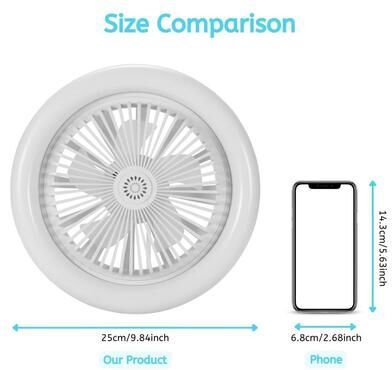
Uplift Picks AirHalo Portable Ceiling Fan Compact USB Rechargeable Mini Fan AirHalo Portable Ceiling Fan Compact USB Rechargeable Mini FanStay cool anywhere with this portable ceiling fan designed for convenience and modern living. Its compact size delivers refreshing airflow without taking up much space, making it perfect for small rooms or travel use. Lightweight and easy to...168,50 $*Shipping: 0,00 $Secure redirect to the provider
-
All Categories Goods Scissor Jack Portable Lift Stand For ATVs, Motorcycles & Bikes Compact & Durable Scissor Jack Portable Lift Stand For ATVs, Motorcycles & Bikes Compact & DurableElevate your lifting game with this scissor jack stand designed for ATVs, motorcycles, and bikes. Perfect for home garages or professional mechanics, this portable tool provides the convenience and strength you need to safely lift your vehicle. With...149,97 $*Shipping: 0,00 $Secure redirect to the provider
-
All Categories Goods Portable Heavy Duty Ladder, Anti Slip Pedal, Safety Locking Design, Soft Handgrip, Compact And Durable Portable Heavy Duty Ladder, Anti Slip Pedal, Safety Locking Design, Soft Handgrip, Compact And DurableIntroducing the Heavy Duty Ladder that combines durability, safety, and portability in one essential tool. Whether you're tackling home improvement projects, accessing hardtoreach areas, or working outdoors, this ladder is designed to meet your...113,97 $*Shipping: 0,00 $Secure redirect to the provider
-
Fusion Finds Rechargeable LED Makeup Mirror With Magnification Portable Travel Lighted Compact Mirror pinkLook your best wherever life takes you with this LED makeup mirror designed for flawless touchups anytime. This travel makeup mirror combines bright LED lighting, 1X and 3X magnification, and a slim foldable design that fits effortlessly into your...34,97 $*Shipping: 0,00 $Secure redirect to the provider
-
When are ligands neutrally charged?
Ligands are neutrally charged when they have an equal number of positive and negative charges. This can occur when the ligand has a net charge of zero, such as in the case of water (H2O) or ammonia (NH3). Additionally, ligands can also be neutrally charged when they form coordinate covalent bonds with a metal ion, resulting in a neutral overall charge for the complex. **
-
What is the toughness of ligands?
The toughness of ligands refers to their ability to form stable coordination complexes with metal ions. Ligands with high toughness have strong bonds with the metal ion, making them less likely to dissociate from the complex. This property is important in determining the stability and reactivity of coordination complexes. Tough ligands are often used in catalysis and other applications where the complex needs to remain intact under harsh conditions. **
-
What is the chelating ability of ligands?
The chelating ability of ligands refers to their ability to form coordination complexes by binding to a central metal ion through multiple donor atoms. Ligands with chelating ability can form more stable complexes compared to monodentate ligands because they can wrap around the metal ion, forming a ring-like structure known as a chelate. This chelate structure enhances the stability of the complex by reducing the chances of other molecules displacing the ligand from the metal ion. Chelating ligands are commonly used in various fields such as medicine, environmental science, and industrial chemistry due to their ability to form stable and selective complexes with metal ions. **
-
What is the structural formula of ligands?
The structural formula of ligands can vary depending on the specific ligand, but in general, ligands are molecules or ions that have one or more lone pairs of electrons that can be donated to a metal ion. The structural formula typically includes the arrangement of atoms and lone pairs of electrons that are available for coordination to the metal ion. Ligands can be classified as monodentate, bidentate, tridentate, etc., depending on the number of donor atoms they have available for coordination. Overall, the structural formula of ligands reflects their ability to form coordination complexes with metal ions. **
Similar search terms for Ligands
-
Fusion Finds Portable LED Makeup Mirror With Magnification USB Rechargeable Travel Compact Mirror blackExperience flawless touchups wherever life takes you. This travel makeup mirror combines a crystalclear 1X mirror with a 5X magnifying side, helping you perfect every detail from eyeliner to brows with ease. A builtin soft LED fill light delivers...84,97 $*Shipping: 0,00 $Secure redirect to the provider
-
Perfect Picks Market Rechargeable Outdoor LED Mini Keychain Light Super Bright, Magnetic Warning Flashlight, Portable And Durable Rechargeable Outdoor LED Mini Keychain Light Super Bright, Magnetic Warning Flashlight, Portable And DurableIlluminate your adventures with the Rechargeable Outdoor LED Mini Keychain Light. This ultrabright, magnetic warning light is perfect for anyone who needs reliable, onthego lighting. Compact yet powerful, it is designed to deliver high intensity in...39,97 $*Shipping: 0,00 $Secure redirect to the provider
-
Fusion Finds Rechargeable LED Makeup Mirror With Magnification Portable Travel Lighted Compact Mirror whiteLook your best wherever life takes you with this LED makeup mirror designed for flawless touchups anytime. This travel makeup mirror combines bright LED lighting, 1X and 3X magnification, and a slim foldable design that fits effortlessly into your...34,97 $*Shipping: 0,00 $Secure redirect to the provider
-
Fusion Finds Portable LED Makeup Mirror With Magnification USB Rechargeable Travel Compact Mirror pinkExperience flawless touchups wherever life takes you. This travel makeup mirror combines a crystalclear 1X mirror with a 5X magnifying side, helping you perfect every detail from eyeliner to brows with ease. A builtin soft LED fill light delivers...84,97 $*Shipping: 0,00 $Secure redirect to the provider
-
How can one determine the toughness of ligands?
The toughness of ligands can be determined by their ability to form stable complexes with metal ions. Ligands with multiple donor atoms and strong donor atoms, such as nitrogen, oxygen, and sulfur, are generally tougher than ligands with fewer or weaker donor atoms. Additionally, the size and charge of the ligand can also affect its toughness, with larger and negatively charged ligands typically being tougher. Experimentally, the toughness of ligands can be determined by measuring the stability constants of the metal-ligand complexes they form. **
-
What is the number of ligands in coordination chemistry?
The number of ligands in coordination chemistry refers to the number of donor atoms in a molecule or ion that can bond to a central metal atom. The number of ligands can vary depending on the coordination number of the central metal atom. Common coordination numbers include 2, 4, 6, and 8, which correspond to complexes with 2, 4, 6, or 8 ligands, respectively. The coordination number and the number of ligands determine the geometry and overall structure of the coordination complex. **
-
What is the number of ligands in complex chemistry?
The number of ligands in complex chemistry refers to the number of molecules or ions that are bonded to a central metal atom. The number of ligands can vary depending on the coordination number of the metal atom, which is the total number of bonds formed with the ligands. Common coordination numbers include 2, 4, 6, and so on, which correspond to the number of ligands bonded to the central metal atom. The coordination number and the number of ligands play a crucial role in determining the geometry and properties of coordination complexes. **
-
Which factors influence the exchange rate of ligands in the complex?
The exchange rate of ligands in a complex is influenced by several factors. One key factor is the strength of the bond between the ligand and the central metal ion. Stronger bonds typically result in slower exchange rates. Additionally, the steric hindrance around the metal center can affect the exchange rate, with bulky ligands hindering the exchange process. The nature of the solvent and the temperature of the system can also impact the exchange rate of ligands in a complex. **
* All prices are inclusive of VAT and, if applicable, plus shipping costs. The offer information is based on the details provided by the respective shop and is updated through automated processes. Real-time updates do not occur, so deviations can occur in individual cases. ** Note: Parts of this content were created by AI.